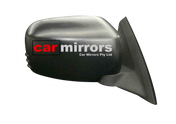
Side Mirror Replacement Cost in Australia: The 2026 Price Guide
By Duber, The Car Mirror Man · Car Mirrors Australia
Glass-only replacement. Mobile. Every make and model. Nationwide.
Side mirror replacement in Australia usually costs between $135 and $600+. The single biggest thing driving that spread — more than your car, more than your suburb, more than the workshop — is whether you need just the glass replaced, or the whole mirror unit. In this guide we break down exactly what you’ll pay, why the price varies so much between quotes for the same job, and how to make sure you’re not paying for parts you don’t need.
Glass-only replacement is the cheapest, often from $135. A plain full mirror unit sits in the $200–$400 range. A powered mirror with heating, indicator, blind-spot monitoring or a camera can run $400–$600+. Mobile fitting (a technician comes to you at home or work) is usually included in that price, not an extra call-out.
- What a side mirror actually is (and why it matters for the price)
- What side mirror replacement costs — by type
- Which fix do you need? (decision flow)
- Rough costs for common Australian cars
- What drives the price up or down
- Common causes of side mirror damage
- Should you replace it yourself?
- Genuine vs aftermarket parts
- When to replace both mirrors, not just one
- Does insurance cover it?
- Is it illegal to drive with a broken side mirror?
- When to call a mirror specialist vs a panel shop
- The cheapest way to get it done properly
- FAQ
- Sources & authority
FROM $135 · MOBILE · AUSTRALIA-WIDE
Not sure exactly what you need? Send us a photo — we'll tell you the smallest fix that solves it.
What a side mirror actually is (and why it matters for the price)
Related: book a mobile fitter in your city · the repair-or-replace decision · when the glass on its own will do
The Anatomy
Most Australians think of a side mirror as one part. Look closer and it’s five separate parts stacked on top of each other: the glass, the backing plate, the housing, the mirror motor, and the wiring loom. When a mirror gets damaged, usually one part is broken and the rest are fine. Understanding which part is damaged is the single fastest way to work out what a fair price is.

Understanding this five-layer stack tells you almost everything you need to know about pricing. If the glass is cracked but layers 1, 2, 3, and 5 are all fine, you should be paying from $135. If the whole assembly has been ripped off the car (all five layers), you’re paying $200–$500 depending on features. If someone quotes you $500 for a job where only layer 4 is broken — get a second opinion.
Before you get quoted, do a 60-second inspection: (1) is the glass cracked or shattered but the plastic housing intact? (2) does the mirror still move when you use the electric adjust? (3) is there any wiring hanging out? If (1) yes, (2) yes, (3) no — you need glass only, and the fair price is $135–$180. Anything higher without explanation is negotiable.
What side mirror replacement costs — by type
The Numbers
Once you know which part is broken, the price is predictable. Here’s the full breakdown by repair type — the same table our fitters use to quote every Australian job:
| What’s replaced | Typical cost | When you need it |
|---|---|---|
| Mirror glass only | from $135 | Glass is cracked or shattered. Housing and motor undamaged. The vast majority of jobs on late-model cars. |
| Mirror cover / housing | $150–$300 | The plastic outer cap is scratched, cracked or snapped off. Glass and motor intact. Common after a low-speed brush. |
| Full manual mirror unit | $200–$350 | The whole mirror is smashed off, hanging by the wiring, or internal mounting is broken. No power-fold or heating. |
| Powered / heated mirror | $350–$500 | Electric adjust, demist heating, integrated indicator, or power-fold feature. |
| Blind-spot or camera mirror | $450–$600+ | Blind-spot monitoring, camera, auto-dimming, memory-position. Late-model European and premium Japanese cars. |

Match your damage to the five bands above BEFORE you ring anyone for a quote. Then when a workshop tells you the price, you’ll know instantly whether they’re quoting the right fix. Panel shops sometimes default to the most expensive band because it’s the easiest to bill.
Which fix do you actually need?
Decision Flow
Work through these four questions in order. The answer tells you which repair type applies, and roughly what a fair Australian price is:
Answer these in order — stop at the first “yes”
Housing means the coloured outer shell. If it’s not broken and the glass is, you need glass only.
Rare in isolation but happens after brushes and low-speed hits on the outside of the mirror.
Full replacement needed. Cost depends on the mirror’s features (see next).
Feature-heavy mirrors cost the most because parts are pricier and calibration is involved.
Take a clear photo of the damaged mirror before you contact anyone for a quote. Send that photo with the quote request. A specialist can price the job in under a minute from a good photo, and you’ll skip the “come to the workshop for an inspection” step.
Rough costs for common Australian cars
By Vehicle
Model matters. Common Australian cars — Corolla, Mazda 3, HiLux, Ranger, i30 — have cheaper and more available parts than rare European or luxury models. Here are typical Australian price bands for the most-common cars on the road:
| Vehicle | Glass only | Full unit | Notes |
|---|---|---|---|
| Toyota Corolla | from $135 | $220–$420 | Very common. Most models have separate glass, cheap to fix. |
| Mazda 3 | from $135 | $240–$450 | Powered mirror standard on higher trims — adds cost. |
| Toyota HiLux | from $145 | $260–$480 | Larger, heavier assembly. Common part, quick fix. |
| Ford Ranger | from $145 | $280–$520 | Wildtrak and Raptor variants use larger mirror assemblies — more expensive. |
| Hyundai i30 | from $135 | $230–$430 | Very common. Standard parts. |
| Mitsubishi Triton | from $145 | $260–$470 | Similar to HiLux in cost bands. |
| VW Golf | from $145 | $260–$490 | European part; heated as standard on most trims. |
| Nissan X-Trail | from $135 | $250–$460 | Higher trims have blind-spot — pushes to $450+. |
| Kia Sportage | from $135 | $240–$470 | Newer models have camera on the mirror. |
| BMW / Mercedes / Audi | from $175 | $450–$800+ | Feature-heavy. Blind-spot, memory, auto-dimming standard. |
Not on this list? Every make and model — European, Japanese, Korean, American, commercial vans, utes — is quotable. The price you pay maps to the type of replacement (glass / cover / full / powered) more than to the badge on the front.
When you ring for a quote, lead with three details: (1) your car’s make, model, and year; (2) driver or passenger side; (3) the answer to the 4 decision-flow questions above. Any specialist can quote you a fixed price in under a minute with those three details.
What drives the price up or down
Why This Matters
Two people can get quoted $135 and $680 for what looks like the same job. The gap isn’t always the workshop overcharging — it’s usually five specific factors that shift the price:
- Glass vs whole unit. By far the biggest factor. If only the glass is cracked and you’re quoted a full mirror, you’re paying for parts you don’t need. Ask directly: “can you just replace the glass?”
- Features on the mirror. Heating (for demisting on cold mornings), power-fold, integrated indicator, blind-spot monitor, camera, auto-dimming — each one adds cost. A basic manual mirror is under $250 fitted; a fully-loaded mirror with camera + blind spot pushes past $600.
- Your car. Common Australian cars (Corolla, Mazda 3, HiLux, i30) have cheap and available parts. Rare or luxury models — European premium brands especially — cost more because the parts cost more, and sometimes the parts are only available through dealer channels.
- Genuine vs aftermarket parts. Aftermarket is 30–50% cheaper and works well for the vast majority of jobs. Genuine matches exactly, which matters for heated or camera mirrors where calibration is involved (more on that below).
- Where the work is done. A panel shop quotes the full mirror by default because it’s faster to bill and stocks fewer part variants. A mobile mirror specialist quotes the smallest fix that solves it — often glass only. That difference alone is $100–$300 on the same job.
Panel shops that quote a “full mirror replacement” without inspecting whether glass-only is possible. This is the single most common way Australians overpay for a mirror job — especially after an insurance quote where the shop knows the insurer is paying, so there’s no pressure to keep the price down.
The single most useful sentence to say to a mirror quote is: “can you tell me if just the glass can be replaced?” If they say no without inspecting the mirror, get a second opinion.
Get a fixed-price quote from a mobile mirror specialist before you commit to anything. Ask three questions: (1) glass only or full? (2) genuine or aftermarket? (3) fixed price or approximate? A mobile specialist quotes the smallest fix that solves it — for glass-only replacements, that’s from $135. Photos of the damage make the quote faster.
FIXED PRICE · SAME DAY · WE COME TO YOU our European-cars specialist page. our classic + vintage mirror service.
Ready for a fixed-price quote? Photo in, price back — usually within the hour.
Common causes of side mirror damage in Australia
Why Mirrors Break
Understanding how mirrors break in Australia helps you (a) prevent it happening again, and (b) work out whether it’s your fault, someone else’s fault, or an at-fault claim on insurance. Based on the jobs we quote across the country, roughly:
Parking hits are the #1 cause
Parking hits — either your car being clipped while parked, or you clipping something while parking — account for nearly half of all Australian side mirror jobs. Tight suburban streets, angled kerbside parking, narrow shopping-centre car parks and multi-level garages are the common scenarios. Damage is usually to the housing and the glass; the motor and wiring usually survive.
Vandalism — especially in inner-city areas
Mirrors kicked off overnight in inner-city Sydney, Melbourne, and Brisbane suburbs are one of the more frustrating call-outs we get. Sometimes it’s a full mirror snap-off; sometimes just a kicked-in glass. If you’re on comprehensive insurance and it’s reported to police within 24 hours, it’s claimable — but often the repair is cheaper than your excess. You can read more in the Sydney mobile-repair page.
Storms and hail
Hail seasons in Sydney and southeast Queensland regularly damage the glass on parked cars. Hail damage to mirror glass is almost always a glass-only fix — the housing takes the impact and survives, but the reflective surface pits or cracks. If your car has hail damage across the whole body, though, the mirror is usually handled inside a larger insurance job.
Take a photo of the damage the moment it happens — before you move the car if possible. That photo is valuable for (a) insurance if you claim, (b) police reports for vandalism, and (c) getting an accurate quote from a specialist without needing to bring the car in for inspection.
Should you replace a side mirror yourself?
DIY vs Pro
For a simple glass-only swap on an older car — say a pre-2010 Corolla or Hilux without heating or power adjust — a careful DIY job is possible. YouTube has plenty of guides. Cost of the part alone: often $30–$80. Time: about an hour if it’s your first go.
On any modern car, the picture changes:
- The glass usually clips into a heating element and a power-adjust plate on the back. Lever the wrong spot and you’ll snap the plastic backing.
- The housing often needs to come off to get the glass out. If you crack the housing during removal, you’ve turned a $135 glass job into a $300+ full replacement.
- Modern powered mirrors have calibration procedures after installation — especially anything with a camera, blind-spot sensor, or auto-dimming feature. Skip the calibration and the feature stops working.
The most common DIY failure isn’t the mirror — it’s the wiring. Modern mirrors can have 6–12 wires running through them. Yank the housing wrong and you’ll rip a connector out of the door harness. That’s a $300–$600 auto-electrician job on top of the mirror.
A mirror specialist does a modern powered mirror in 25–40 minutes with the right part, tools, and the calibration knowledge to leave the electronics working exactly as they did before. For anything past a basic manual mirror on an older car, that’s the safer route.
Do DIY only if all three are true: (1) the car is pre-2010, (2) the mirror is manual (no electric adjust, heating, indicator, or camera), (3) only the glass is broken. If any of those three is false, get a specialist — the risk of a $300–$600 wiring accident far outweighs the $80 you’d save on labour.
Genuine vs aftermarket parts
Aftermarket mirror parts (glass, housings, sometimes full assemblies) are 30–50% cheaper than genuine OEM parts. For most jobs on standard cars, aftermarket is perfectly fine — the glass is optically identical, the housing paints up to match, and the fitting is the same.
Where genuine parts matter:
- Heated mirrors. The heating pad geometry differs slightly between brands — genuine is the guaranteed match.
- Camera or blind-spot mirrors. Sensor position and calibration reference points are exact. Aftermarket may fit but the feature may not work reliably.
- Luxury / European cars. Housing colour matching is fussier — aftermarket often doesn’t colour-match well.
- Cars still under manufacturer warranty. Non-genuine parts can void the powertrain or electrical warranty on some manufacturer’s terms.
Ask the specialist which they’re quoting. A good one will offer both prices and explain the difference for your specific car. For a Corolla or Mazda 3 with glass-only damage, aftermarket is almost always the smart choice. For a late-model BMW with camera and blind-spot, pay for genuine.
When to replace both mirrors, not just one
The Both-Sides Question
You rarely need both mirrors replaced at the same time — but there are three scenarios where doing both together saves money and hassle:
- Colour matching after long UV exposure. Australian sun fades mirror housings over 8–10 years. If you replace one housing and the other is heavily faded, the new one will visibly clash. In this case, painting the new one to match, or replacing both, is worth budgeting for.
- Selling the car soon. Buyers notice mismatched mirrors. If the car’s going on the market and one mirror looks worse than the other, replacing both is a small investment for better sale price.
- After a major collision. If a side impact damaged both mirrors and the door skin, insurance is usually paying — do both at once.
In every other case, replace just the one that’s broken. You’re not saving money by doing both if only one is damaged.
Ask the specialist to inspect both mirrors during the quote visit. A quick 30-second check tells you whether the other side is quietly damaged or worn in a way you haven’t noticed — and doing both at once can save a second call-out later.
Does insurance cover side mirror replacement?
Comprehensive car insurance can cover it — but for smaller mirror jobs, the repair is often cheaper than your excess. Do the maths before you claim:
| Job cost | Your excess | What to do |
|---|---|---|
| Glass only ($135–$180) | $500–$800 | Pay direct — much cheaper than excess. |
| Full manual mirror ($200–$350) | $500–$800 | Pay direct. |
| Powered mirror ($350–$500) | $500–$800 | Break-even — get a quote first. |
| Blind-spot / camera mirror ($450–$800) | $500–$800 | Claim may make sense — check no-claim bonus impact. |
Even where a claim makes sense, get an independent fixed-price quote from a mobile mirror specialist first. Most policies let you nominate your own repairer — a written quote you already hold gives you leverage in that conversation.
Get a fixed-price quote from a mobile mirror specialist first. If the repair is under your excess, pay direct and keep your no-claim bonus. If it’s over your excess and a claim makes sense, use that written quote to nominate your own repairer under your policy.
Is it illegal to drive with a broken side mirror in Australia?
The Law
Yes, in most cases. Australian Road Rules require two functional rear-view mirrors on cars: a centre rear-view mirror and at least one side mirror providing a clear view to the rear.[1] This is enforced under state-based Road Rules that mirror the national model rules.
| State | Rule | Typical fine |
|---|---|---|
| NSW | Two clear rear-view mirrors required[2] | ~$120 + demerit points |
| Victoria | Two rear-view mirrors, clear rear view[3] | ~$180 |
| Queensland | Two mirrors, clear rear vision[4] | ~$115 |
| WA | Two mirrors required | ~$100 |
| SA | Two mirrors, clear view | ~$150 |
A missing mirror or one so cracked the driver can’t see through it is the enforceable case. A small chip in the corner of the glass is usually fine legally — but it will get bigger, and you’ll pay to fix a full crack later. Better to sort it early.
If police issue a defect notice (yellow or red sticker) for a broken mirror, you have a set window to get it fixed and inspected. Ignoring a defect notice leads to registration cancellation. Same-day mobile replacement is the fastest way to clear a defect notice.
If your mirror damage means you can’t see clearly rearward, get it replaced within days, not weeks. If you’ve been issued a defect notice, book a same-day mobile repair before the compliance window closes — specialists can usually clear a mirror defect on the day you call.
When mobile mirror specialists are the right fit
Why Mobile Specialists
Mobile mirror specialists focus on one thing: mirrors. No workshop overheads, no full-vehicle scheduling, no upsell into unrelated work. The service is optimised to give you the smallest fix that solves the problem, at a fixed price, at your driveway. Here’s when a mobile specialist is the right call:
| Situation | Why a mobile mirror specialist is the right fit |
|---|---|
| Glass cracked only, housing intact | We assess for glass-only from $135 — the cheapest possible fix, done in 20–40 minutes. |
| Whole mirror smashed off | Full-unit replacement, same-day, mobile — no workshop visit, no time off work. |
| Late-model powered mirror with camera or blind-spot | Calibration expertise built in. Written 3-year written warranty on parts and electronics. |
| Need it fixed today | Same-day mobile service in most Australian metros when you book before midday. |
| Insurance-covered damage | Independent fixed-price quote you can use to nominate your own repairer under most policies. |
| Defect notice issued | Same-day mobile service clears the defect within the compliance window. |
For anything mirror-only, a mobile specialist is the fastest, most convenient route — and for glass-only work, the most economical too. Send a photo of the damage and get a fixed price back before you decide anything else.
12–48 MONTH WARRANTY · CUT IN AUSTRALIA
Skip the dealership quote. Get the real number for your mirror in 60 seconds.
The cheapest way to get it done properly
You don’t need to take a day off. You don’t need to sit in a panel-shop waiting room. And you don’t need to pay for a whole mirror when only the glass is cracked.
The cheapest reliable route for a side mirror replacement in Australia:
- Do the 60-second self-diagnostic at the top of this guide. Know which of the five bands you fall into before you ring anyone.
- Get a mobile mirror specialist to quote it. They come to you, look at the actual damage, and quote the smallest fix that solves it.
- Ask specifically about glass-only. If the housing and motor are intact, glass-only is a fraction of the price. From $135.
- Get it same-day where possible. A cracked mirror gets worse, and driving with it is risky and (in most states) illegal.
- Check warranty. A good specialist gives you a written all work is guaranteed on parts and workmanship. If they don’t, get another quote.
That’s exactly what we do at Car Mirror Man — mobile side mirror replacement across Australia, from $135 for glass, every make and model, all work is guaranteed, same-day in most metro areas.
Get your side mirror replacement quote in 60 seconds
Tell us your car and what’s broken. We’ll text back a fixed price and come to you — often same-day.
Get My Quote →Glossary — side mirror parts and features
- Glass
- The reflective surface. Often has a heating element behind it. Cheapest part to replace when only the glass is cracked.
- Backing plate
- The plastic disc the glass clips onto, mounted on the mirror motor. Replaces with the glass on most modern cars.
- Housing / cover
- The outer shell of the mirror — the coloured plastic part visible from outside the car.
- Mirror motor
- The small electric motor that moves the glass up/down/left/right when you use the door-mounted adjust switch.
- Power fold
- The mechanism that folds the whole mirror in against the door — usually automatic when you lock the car.
- Heated mirror
- Electric element behind the glass that clears fog and light frost. Standard on most European cars.
- Blind-spot monitor (BSM)
- A sensor built into the mirror that lights up when a car is in your blind spot. Common from 2018 onwards on mid-to-high trim cars.
- Auto-dimming mirror
- The mirror darkens automatically when a bright light hits it from behind at night. Standard on premium European cars.
- OEM part
- Original Equipment Manufacturer — the exact part the car came with from the factory.
- Aftermarket part
- A third-party part designed to fit the same vehicle. Usually 30–50% cheaper than OEM and fine for most jobs.
- Defect notice
- An official notice from police or transport authority stating the vehicle has a fault that must be repaired. Ignoring it leads to registration cancellation.
- Calibration
- The setup procedure after installing a camera or sensor-equipped mirror to ensure the electronics function correctly.
Side mirror replacement cost — FAQs
How much is the cheapest side mirror replacement?
Glass-only replacement is the cheapest, from $135 in Australia, when the housing and motor are undamaged.
Why are side mirror replacement quotes so different?
Usually because you’ve been quoted the full mirror unit when only the glass is broken, or because your mirror has features (heating, blind-spot, camera) that add cost. Always ask if glass-only is possible.
Is aftermarket mirror glass okay?
For most cars, yes — aftermarket glass is optically identical and 30–50% cheaper. Genuine matters for heated, blind-spot, and camera mirrors where sensor calibration is involved.
Does insurance cover side mirror replacement?
Comprehensive insurance can cover it, but for glass-only or basic full mirrors, the repair is usually cheaper than your excess — pay direct. For powered mirrors above $400, a claim may make sense depending on your excess and no-claim bonus.
How long does side mirror replacement take?
Most jobs take 20 to 40 minutes on-site with a mobile specialist. Powered or heated mirrors can push to an hour because of wiring connections.
Can you drive with a cracked side mirror?
Legally, no — Australian road rules require two functional rear-view mirrors. A small chip may be tolerated, but a mirror cracked to the point you can’t see through it will attract a fine and potentially a defect notice.
Do I need to take my car to a workshop?
Not with a mobile mirror specialist. We come to your home, work, or wherever the car is parked, fit the mirror in 20–40 minutes, and leave. No workshop visit, no time off work.
What about calibrating a blind-spot or camera mirror?
Calibration is done as part of the installation for mirrors with sensors or cameras — a good specialist has the tools and knowledge to leave the electronics working exactly as they did before.
Should I replace both mirrors if only one is broken?
Usually no. Only if the car’s heavily faded and the new mirror will visibly clash, if you’re selling soon, or if a collision damaged both. Otherwise replace just the broken one.
What if my mirror has a camera or blind-spot sensor?
The specialist handles calibration as part of the installation. Cost lands in the $450–$600+ band because the assembly is more expensive. Warranty covers both the physical part and the electronics working correctly.
Ready to get quoted?
60-second quote form. Text-back with a fixed price. Same-day service in most Australian metros.
Get My Quote →Sources & authority
- Australian Road Rules (National Transport Commission) — Rule 297: driver’s view (mirrors requirement).
- Transport for NSW — road safety and rules: two functional rear-view mirrors requirement.
- Victorian Road Safety Road Rules 2017 (legislation.vic.gov.au): mirror clearance and rear view requirements.
- Queensland Government Transport Rules: rearward vision requirements.
- Australian Design Rules — ADR 14/02 Rear Vision (legislation.gov.au): ADR 14 — rear vision mirrors, technical standards for vehicle manufacture.
- Bureau of Infrastructure and Transport Research Economics (BITRE): road safety statistics, Australian road accident data.
Prices & information disclaimer
Prices, information and product details in this article are indicative only and reflect our real quoted jobs at the time of publication. Costs are subject to change with inflation, part supply, vehicle model, and market conditions. We update our content periodically to reflect current pricing but cannot guarantee exact prices at all times. For an exact quote on your car, contact us directly — quotes are always fixed price before the job starts.