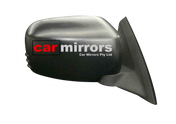
Wing Mirror, Side Mirror or Rear-View Mirror? Explained
By Duber, The Car Mirror Man · Car Mirrors Australia
Short answer: wing mirror, side mirror and door mirror all mean the same part — the mirror bolted to the outside of your door. Rear-view mirror is the odd one out, because in Australia it gets used for both the exterior mirrors and the little one glued to the windscreen. That single ambiguity is the reason so many people ring the wrong trade and get quoted for the wrong job.
In Adelaide? We can sort out which mirror you actually have at your home or work, anywhere across the metro — see our full Adelaide mirror service.
If you are in Adelaide with a broken mirror and you are not sure what to call it, this guide sorts it out: where each name came from, what the law actually requires, which parts fail, and who fixes what. By the end you will know exactly which mirror you have got, what it should cost, and who to call.
The three names that mean one thing
Wing mirror, side mirror and door mirror are interchangeable. The differences are historical and regional, not mechanical.
| Name | Origin | Used mainly in |
|---|---|---|
| Wing mirror | Early cars mounted the mirror on the front wing (the guard), not the door. | UK, Ireland, older Australian usage |
| Side mirror | Plain description of where it sits. | Australia, US, Canada |
| Door mirror | Reflects the modern mounting point. | Manufacturer workshop manuals |
| Rear-view mirror | Describes the function, not the location. | Ambiguous — can mean either |
The wing-mirror name is a genuine historical artefact. On pre-war and early post-war cars the mirror really was mounted out on the wing, well forward of the driver, because doors were thin and there was nowhere sensible to hang it.[5] As bodies got wider and doors got deeper, the mirror migrated back to the door where it sits today — but the name stuck in Britain and travelled to Australia with British cars.
The one that causes all the confusion
Here is the split that matters. Every modern car has two completely different kinds of rear-facing mirror, and they have almost nothing in common beyond the word “mirror”.
Two of them, one per door. Bolted through the door skin or the A-pillar. Contain glass, a backing plate, usually a motor, often an indicator strip, sometimes heating, blind-spot electronics or a camera. Serviced by mirror specialists and panel shops.
One, bonded to the inside of the windscreen on a small metal button. Modern versions add auto-dimming, toll tags, cameras and sensors. Serviced by auto glaziers, because refitting it means bonding to the windscreen.
If your interior mirror has dropped into your lap on a hot day — extremely common in an Adelaide summer — that is a windscreen bonding job.[6] If the mirror on your door is cracked, hanging, or has lost its glass, that is a mirror specialist job. Car Mirror Man does the exterior ones. We do not repair or replace interior rear-view mirrors.

What the law actually calls them
Australian regulation avoids the argument entirely. The national standard is Australian Design Rule 14/02 — Rear Vision Mirrors, and it uses the term rear vision mirror for all of them, then distinguishes by position.[1]
ADR 14/02 sets out the field of view each mirror must provide, minimum reflecting surface, mounting requirements and the impact-deflection rules that force mirrors to fold or break away in a collision rather than injure a pedestrian.[2] It applies to the vehicle as manufactured, which is why replacement glass has to be ADR-compliant rather than any piece of mirrored glass cut to shape.
On top of the design standard sit the Australian Road Rules, the model law each state adapts.[4] These are the in-service rules — the ones that decide whether you get a fine. They require a driver to have a clear view of the road behind, which in practice means your mirrors must be present, intact and adjusted.
A missing exterior mirror, or one cracked so badly you cannot see through it, is the enforceable case. A small chip usually is not. If the mirror is gone entirely on the driver side, treat it as urgent — that is the one that gets defected and the one that makes changing lanes genuinely dangerous.
Five parts, five different repairs
The single most useful thing to understand about an exterior mirror is that it is not one component. It is a stack of five, and they fail independently. This is where the money is.

Plain, convex, aspherical, heated or auto-dimming. The most commonly damaged layer and the cheapest to replace on its own.
The plastic carrier the glass clips onto. Snaps on impact and is often misdiagnosed as a dead mirror.
The painted shell. Scuffed against gateposts and carpark pillars, and replaceable without touching the glass.
Tilts the glass and, on many cars, folds the whole mirror. Replaceable as a unit.
The turn-signal repeater in the cover. A failed strip rarely needs a whole new mirror.
Blind-spot modules, cameras and heating elements. These raise the price and are quoted per vehicle.
A quote for a whole assembly when only layer one is broken is the most common overcharge in the industry. It is not usually dishonest — a full assembly is one part number and one labour line, so it is simply faster to sell. But it can be several times the price of the correct repair.
What each repair costs in Adelaide
| What failed | Typical cost |
|---|---|
| Glass only | from $135 |
| Cover / housing | $150–$300 |
| Full mirror, plain | $200–$350 |
| Full mirror, powered | $350–$500 |
| Blind-spot, camera or auto-dim | Quoted per vehicle |
Indicative bands. The exact figure depends on the vehicle and the features the mirror carries. The full breakdown is in our Adelaide side mirror cost guide.
Why Adelaide mirrors fail when they do
Heat
A car parked on an Adelaide street in February gets hot enough to soften adhesives that were never designed for it. Two failures follow. Interior mirrors let go of the windscreen button. And on a broad band of vehicles built roughly 2009 to 2017, the adhesive holding the exterior glass to its backing plate degrades until the glass simply falls out — no impact required.
Tight spaces
Narrow inner-suburban streets, older carparks with bays sized for a 1980s sedan, and the general width of a modern SUV. Mirrors are the first thing to make contact, which is exactly why ADR 14/02 requires them to fold or break away rather than resist.[3]
Wear in the fold mechanism
Power-fold mirrors have small plastic clips and a geared motor. Fold them a few thousand times and something eventually slips. The symptom is a grinding noise or a mirror that stops halfway — and it is almost always a clip or a motor, not the whole assembly.
Which trade do you actually need?
| Problem | Who fixes it |
|---|---|
| Exterior mirror glass cracked or missing | Mirror specialist |
| Exterior mirror hanging off / housing smashed | Mirror specialist |
| Mirror will not adjust or fold | Mirror specialist |
| Interior mirror fell off the windscreen | Auto glazier |
| Mirror damage plus door or panel damage | Panel shop, or a mirror specialist for the mirror alone |

How to describe your mirror when you ask for a quote
You do not need the right jargon. You need the right photo. Anyone quoting a mirror without seeing it is guessing, and guesses get corrected upwards later.
A short history of a part nobody thinks about
The rear-view mirror was not standard equipment on early cars. Drivers turned around, or had a passenger do the looking. The interior mirror is generally credited to racing — a driver who wanted to run without a riding mechanic needed some way of seeing the cars behind, and a mirror was the obvious answer.[6] It moved from a racing improvisation to a road-car fitting over the following decades.
Exterior mirrors took longer, and for a long time only one was fitted — on the driver side. A passenger-side mirror was an optional extra well into the 1980s on some models, which is why older cars sometimes have an obviously aftermarket unit on the left. Mandatory fitment, minimum fields of view and the impact-deflection requirements arrived through vehicle design standards, and in Australia that is ADR 14.[1]
The wing-mounted position lasted longest on British sports cars, where a mirror on the wing gave a genuinely useful sightline down a narrow body.[5] It also made the mirror vulnerable and awkward to adjust from the driver seat, which is why door mounting won in the end.
Flat or convex — and why your two mirrors are different
Look closely and the two exterior mirrors on most Australian cars are not the same. The driver side is usually flat or very gently curved; the passenger side is more strongly convex. That is deliberate.
Shows objects at their true size and distance. Easy to judge closing speed, but a narrower field of view and a bigger blind spot. Standard on the driver side.
Curved, so it squeezes a wider scene into the same area. Much smaller blind spot, but everything looks further away than it is. Common on the passenger side.
Some cars use aspherical glass, which is flat across the inner portion and curves away at the outer edge, giving both behaviours in one piece. It matters when you order replacement glass: fitting flat glass where the car had aspherical will change how the mirror reads, and drivers notice within a day. Getting the correct type is part of why we ask for a photo rather than working from a model name. There is more in our guide to flat versus convex car mirrors.
What is inside a modern driver-assist mirror
A mirror on a 2010 hatchback and a mirror on a 2024 SUV are different orders of complexity. The newer one may contain any of the following, and each one changes both the part price and the fitting job.
A warning light in the glass, fed by radar sensors in the rear bumper. The glass carries the indicator, not the sensor — a useful distinction when something stops working.
A film behind the glass that clears fog and frost. Replacement glass must carry the element and the correct connector.
Electrochromic glass that darkens against headlight glare, the same principle used in interior auto-dim mirrors.
Surround-view systems mount a camera under the housing. These require care on removal and, on some vehicles, recalibration.
A downward light in the base of the housing, often projecting the badge. Cosmetic, but part of the assembly cost.
Motors that return to a stored position per driver. More wiring, more to go wrong, more to test after fitting.
This is the reason a blanket price for a full mirror unit is meaningless. A plain manual mirror on a small hatch and a camera-equipped blind-spot mirror on a large SUV are not comparable parts, which is why we quote a full unit per vehicle rather than publishing a single band.
Your mirror just broke. What now?
If the glass is cracked but still in place
You can usually drive, but treat it as temporary. Cracked glass fractures the image and makes distance judgement unreliable, and a mirror that fails a roadworthy inspection will fail it regardless of whether the car is otherwise perfect. Book the repair rather than living with it.
If the glass has fallen out
Keep the pieces if the backing plate came with it — it helps identify the exact part. Do not attempt to glue the glass back to the plate with household adhesive. Mirror glass sits on a specific carrier and general-purpose adhesives either fail in the next hot week or bond so hard that the plate is destroyed when the glass is next replaced.
If the whole mirror is hanging off
Secure it so it cannot swing into the door or the car beside you, and cover any exposed wiring. On the driver side, this is the case to fix quickly — you have lost your primary rearward view on the side you change lanes towards most often.
Should you claim on insurance?
For most mirror jobs, no. A typical comprehensive excess sits well above the cost of a glass-only replacement, so claiming would cost you more than paying directly and may affect your no-claim position. Where a claim does make sense is when the mirror is one part of a larger incident — a collision that also took a door or a guard.
If you are claiming, get a written quote first and remember you can usually nominate your own repairer. Our full breakdown is in does car insurance cover a broken side mirror?
Can you replace a wing mirror yourself?
Glass on an older, simple mirror is genuinely doable if you are careful and patient. The glass clips onto the backing plate and comes off with steady pressure and a plastic trim tool. The risk is breaking the plate, which turns a cheap job into a more expensive one.
Anything with wiring is a different proposition. Heated glass, indicator strips, blind-spot modules and cameras all need connectors handled properly, and full assemblies usually require the door trim to come off. Trim clips are single-use on many vehicles and the door card is easy to crack. We cover the honest version in can you replace a side mirror yourself?
The other consideration is the glass itself. Replacement mirror glass has to be ADR-compliant automotive mirror glass with the right curvature for the position it sits in.[2] Generic mirrored acrylic sold as a universal fix is neither, and it will not pass an inspection.
Frequently asked questions
Is a wing mirror the same as a side mirror?
Yes. Wing mirror, side mirror and door mirror all mean the mirror mounted on the outside of the door. Wing mirror is the British term and survives in Australian usage; side mirror is the common Australian and American name; door mirror is what manufacturers use in workshop manuals.
Why is it called a wing mirror if it is on the door?
Because on early cars it was mounted on the front wing, which is the panel over the front wheel. As car bodies widened and doors deepened, the mirror moved back to the door, but the older name stayed in use.
Does rear-view mirror mean the inside mirror or the outside ones?
Both, depending on who is speaking. Australian regulation calls all of them rear vision mirrors. In everyday speech most people mean the interior mirror on the windscreen, so it is worth saying which one you mean when you ask for a quote.
Do mirror specialists replace the interior mirror?
Generally no. Refitting an interior mirror means bonding a metal button to the windscreen, which is auto glazier work. Car Mirror Man replaces exterior side mirrors only.
Is it illegal to drive without a wing mirror in Australia?
The Australian Road Rules require a clear view to the rear. A missing exterior mirror, or one damaged so badly you cannot see through it, is the enforceable case and can attract a fine or a defect notice.
Can I just replace the glass instead of the whole mirror?
In most cases yes, and it is much cheaper. If the housing, motor, indicator and wiring are all working and only the glass is cracked or missing, the glass is the only part that needs replacing.
How much does wing mirror replacement cost in Adelaide?
Glass only starts from $135. A cover or housing is $150 to $300. A full plain mirror is $200 to $350 and a powered one $350 to $500. Mirrors carrying blind-spot, camera or auto-dim electronics are quoted per vehicle.
How long does it take?
A glass-only replacement is usually 20 to 40 minutes on site. Full assemblies and jobs needing the door trim opened take longer, and powered mirrors can approach an hour because of the wiring.
Whatever you call it, we can fix it
Mobile wing mirror and side mirror replacement across metro Adelaide. Glass-only from $135. Send a photo and get a fixed price back.
Get a free quote 1800 088 808Read next
How to tell which you needAdelaide cost guide
Every price band explainedIs it illegal in SA?
Fines and defect noticesWing mirror replacement Adelaide
Our mobile service
More on Adelaide mirrors
Based in Adelaide? These cover the rest of it.
Sources
- Australian Design Rule 14/02 — Rear Vision Mirrors, Federal Register of Legislation — www.legislation.gov.au/Details/F2006L02663
- ADR 14/02 Rear Vision Mirrors, full technical text (PDF) — Department of Infrastructure — www.infrastructure.gov.au/sites/default/files/migrated/vehicles/design/fil
- ADR 14/02 — current consolidated text, Federal Register of Legislation — www.legislation.gov.au/F2006L02663/latest/text
- Australian Road Rules — National Transport Commission — www.ntc.gov.au/laws-and-regulations/australian-road-rules
- Wing mirror — history and design, Wikipedia — en.wikipedia.org/wiki/Wing_mirror
- Rear-view mirror — mount types and history, Wikipedia — en.wikipedia.org/wiki/Rear-view_mirror
Prices and information in this article are indicative only and reflect real quoted jobs at the time of publication. Costs vary with vehicle, part availability and features. Send a photo for an exact fixed price.