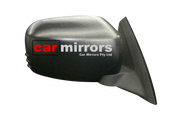
Side Mirror Glass Falling Off a BMW, Mercedes or Audi: Causes and Cost
By Duber, The Car Mirror Man · Car Mirrors Australia · Updated October 2026 · 15 min read

Short answer: side mirror glass falling off a BMW, Mercedes or Audi is usually a glass job, not a whole-mirror job. The glass is held to a backing plate by a bond, and when the bond lets go the glass slips, rattles or drops out. Glass for these makes is from $175, and a whole mirror is typically $450 to $800 or more. If the backing plate and the housing are sound, new glass is often all that is needed. We come to you and quote a fixed price from a photo.
Anywhere in our five cities: we can replace the glass on a European car mirror at your home or work — see our mobile mirror service.
It usually starts as a rattle. Then the glass slides when you adjust it, or sits a little crooked. Then one morning it drops out of the housing, and you are driving with an empty frame. Owners of BMW, Mercedes and Audi are the people who ask us about this most. It is a frustrating fault, because the mirror still looks expensive and well made, and the quote for fixing it is often for a whole new assembly. This guide explains how the glass is held on, why the bond can fail, what to do when it does, and why a glass-only repair is often enough.
How mirror glass is held on
A side mirror has a plastic or metal backing plate behind the glass. The plate is what connects the glass to the mechanism that tilts it, and the glass is bonded to the plate. On many cars there is also a heating element behind the glass, so that frost and fog clear on a cold morning.

The glass and the plate are separate parts. When the glass comes loose, the plate and the mechanism behind it are often undamaged. That is why the repair is often a glass job and not a whole-mirror job.
Why the bond can fail
In our experience the bond that holds the glass to its plate is a polymer-based material, and plastics weather. Ultraviolet light from the sun is what drives the photo-degradation of plastics, it is faster at higher temperatures, and the effects run from loss of colour to surface cracking and brittleness [1]. Over years, a bond that has been through many hot days can lose its grip.
We do not claim a single cause or a single date. In our own experience we see glass coming loose most often on older European cars, and on cars that have spent years parked outdoors in the sun. A mirror that has had a hard life, with many hot days and many knocks, is more likely to let go than one that has not.
What the failure looks like
A failing bond rarely goes all at once. It tends to announce itself in stages, and each stage is a chance to fix it before the glass drops out.
If you notice the first or second of these, a quick repair is much easier than waiting for the fourth.
What to do first
Moving a loose glass can scratch it, crack it or drop it. Leave it where it sits.
If the glass has fallen out, keep it. It tells us which part we are dealing with.
The front of the mirror, the back of the glass if you have it, and the whole car.
A mirror that does not show a clear view to the rear needs fixing before you go far.
The national design rule for rear vision mirrors is about the view the driver gets of the road behind [2]. An empty frame does not meet that, and nor does a glass that is pointing at the sky.
Is the glass the only part you need?
Often it is. If the backing plate is sound, the housing is undamaged and the heater has not been harmed, new glass bonded properly to the existing plate is the repair. Where the plate is cracked, or the heating element behind the glass has been damaged, the job is bigger.
| What we find | What it means | What we do |
|---|---|---|
| Glass has come loose; plate and housing are sound | A bond failure | Fit new glass, bonded to the existing plate. |
| Glass has come loose; the plate is cracked | The plate has failed as well | Replace the plate with the glass. |
| Glass and housing are both cracked | A knock, not just a bond failure | Replace the glass and the cover. |
| The whole mirror has been torn off | A larger repair | Quote a whole mirror from a photo. |
A photo is how we tell which of these you have, and it is the first thing we ask for.
BMW, Mercedes and Audi side mirror glass prices
These makes have their own row on our national price guide, and glass for them costs more than for a small hatchback, because the parts carry more. These are the bands that apply.
| What is replaced | Cost on BMW, Mercedes or Audi | When you need it |
|---|---|---|
| Mirror glass only | From $175 | The glass is loose, cracked or missing. The plate and housing are sound. |
| Cover or housing | $150 – $300 | The outer shell is scuffed, cracked or snapped off. |
| Whole mirror | Typically $450 – $800+ | The mirror is smashed off or the whole assembly needs replacing. |
| Powered mirror | $350 – $500 | Electric adjust, power fold or an indicator is part of the job. |
| Blind-spot, camera or auto-dimming | $450 – $600+ | Sensors or a camera sit inside the mirror. |
How to read the table: start at the top and stop at the first row that matches what is wrong. If the glass is the only thing that has let go, the first row is the answer, and the rest do not apply. For comparison, glass for most other cars starts from $135.
Why European glass needs the right part
The glass on a European car often does more than reflect. It can be heated, so that the element behind it clears the mirror in the cold. It can dim automatically to reduce glare from the headlamps behind you. Automatic dimming works on the electrochromic principle: electrochromic glass changes tint with a small applied voltage, and it can be controlled automatically based on glare [3]. It can also sit beside a blind-spot warning light, which shows in or near the side mirror and is triggered by sensors that watch the side of the car [4] [5].
Each of those features has to be right in the replacement part. A glass for the wrong version will fit the plate and then not work, or not clear, or not dim. That is why we ask for a photo, and why we match the glass to the exact features on your mirror.
Why not just glue it back?
It is tempting. The glass is there, the plate is there, and a tube of glue is cheap. On a European mirror it is rarely a good idea. A glass that is glued back by hand can sit at the wrong angle, can come away again on the first hot day, and on a heated mirror can interfere with the heating element behind it.
A proper repair uses the right bond, applied evenly, with the glass seated correctly on the plate and the features checked afterwards. It is quick, and it is priced by the part. If you would rather try it yourself, send us a photo first and we will tell you what to look out for.
Replace the part, not the whole mirror
A BMW, Mercedes or Audi mirror is one of the dearer assemblies we replace, so the saving from replacing only what failed is large. The question to ask any repairer is which part has failed and whether it can be replaced on its own. If the answer is the glass, a whole mirror is not needed.

Our guide to BMW side mirror parts you can replace shows the same idea part by part, and our national guide to replacing just the glass or the whole unit has a longer decision tree.
What to put in your photo
A good photo saves a visit. We ask for four, and none of them takes more than a minute.
Straight on, so we can see the glass, the frame and any warning light.
If it has fallen out, a photo of the back shows us the bond and any heater connection.
If the glass is out, a photo of the plate behind it shows whether it is sound.
The whole car from the side, with the year and the model if you know them.
Fitting new glass at your home or work
The mirror, the damage and the car. Tell us the make, the model and the year.
We confirm which part failed and quote that part, with the visit included.
Home, work or a car park. We bring the glass and the common parts in the van.
We set the mirror, check the heater, the dimming and any warning light, and confirm a clear view.
There is no separate call-out fee. If you are outside the five cities we serve, we cannot visit, but we can ship the correct glass to you.
Our pages for European car side mirror replacement, Sydney and Melbourne have the details for each city.
Pay yourself or claim on insurance
A glass job is usually well below a typical excess, so paying directly is common. A whole-mirror job on a European car may sit nearer to it. How excess, cover types and claims work is set out on the Moneysmart site [6].
| Job | Example excess | What to do |
|---|---|---|
| Glass only (from $175) | $500 – $800 | Pay directly. It is far below the excess. |
| Cover ($150 – $300) | $500 – $800 | Pay directly. It is below the excess. |
| Whole mirror ($450 – $800+) | $500 – $800 | A claim may make sense. Get a quote first. |
| Blind-spot or camera mirror ($450 – $600+) | $500 – $800 | A claim may make sense. Check your policy. |
Genuine or aftermarket glass
For whole mirrors and parts we supply genuine quality parts unless you ask for something else. Where both options exist we tell you the difference and let you choose. Whichever you choose, you should get a quote that outlines the repair and the cost of both parts and labour [7], and an itemised account of the work done and how the costs were calculated [8]. See our guide to aftermarket versus genuine side mirrors.
Why a loose glass is more urgent than it looks
A glass that has come loose is easy to ignore, because the mirror is still on the car and you can still see something in it. The problem is what you are seeing. A glass that has shifted shows a different part of the road from the one you set it to, and it can move again while you are driving.
It also fails in a way that is hard to predict. A glass that is rattling today can drop out tomorrow, and an empty housing leaves the backing plate and the mechanism open to weather. A repair now is a glass job. A repair later can be a glass job and more.
Check your own mirror in a minute
You do not need tools to find out whether your glass is starting to let go. Four quick checks tell you most of what you need to know.
Use a finger at the edge. It should not click, shift or feel loose.
Watch the glass as it moves. If it lags behind the mechanism or sits crooked, the bond is failing.
A thin line of light or a gap between the glass and the frame can mean an edge has come away.
A rattle on a rough road, or a tick when you close the door, is worth a photo.
If any of those is true, send a photo. It is far easier to fix a loose glass than a missing one.
BMW, Mercedes and Audi: three makes, one question
BMW, Mercedes-Benz and Audi are the three European makes we are asked about most for this fault. They are different cars with different mirrors, and the glass for each is a different part. The question we ask is the same for all three: has the glass let go on its own, or has something else been damaged?
That is why the make is the second thing we ask, after what you can see. The model and the year tell us which part to bring, and the photo tells us whether the glass is the only thing involved.
Questions to ask any repairer
Whoever repairs your mirror, a handful of questions protect you from paying for more than you need.
What our customers tell us
Most people expect a mirror job to be a hassle. The feedback we hear is the opposite.
Every review quoted on this site is a real, verified customer review. We do not write them and we do not edit them.
Warranty and your rights
Every fit carries a written warranty on the part and the workmanship, and the terms are on our warranty page. Under Australian consumer law a service must also be carried out with due care and skill [9].
Every band above comes from our national price guide, which is the single source of truth for what we charge. If you want the full breakdown by part and by vehicle, read our side mirror replacement cost guide.
We come to you in five cities
Every job is mobile. We drive to your home, your work or the car park the car is sitting in, and the mirror is fitted and tested before we leave.
Frequently asked questions
Why is the glass falling off my BMW, Mercedes or Audi mirror?
The glass is bonded to a backing plate, and the bond can let go. Polymer-based materials degrade under ultraviolet light, oxygen and heat. In our experience it is most common on older European cars that have spent years in the sun.
How much does it cost to replace the glass?
Glass for BMW, Mercedes and Audi is from $175. A whole mirror is typically $450 to $800 or more, and a blind-spot or camera mirror is $450 to $600 or more.
Do I need a whole new mirror?
Often not. If the backing plate and the housing are sound, new glass bonded to the existing plate is usually enough.
Can I glue the glass back on myself?
We would not recommend it. Glue applied by hand can leave the glass at the wrong angle, fail again, and on a heated mirror interfere with the heating element. Send us a photo first.
Will the new glass keep my heater and auto-dimming working?
Yes. We match the glass to the exact features on your mirror, including heating, dimming and any blind-spot warning light.
Do you charge a call-out fee?
No. The visit is part of the price.
Should I claim on insurance?
For a glass job paying directly is usually cheaper than the excess. We do not bill insurers directly, and we give you an itemised invoice.
Do you fit genuine parts?
We supply genuine quality parts unless you ask for something else.
Do you replace the interior rear-view mirror?
No. We replace exterior side mirrors only.
More on mirrors
Related guides and services.
Sources
- Photodegradation of plastics (section 4.11) — UV from sunlight causes discolouration, surface crazing and embrittlement, Food and Agriculture Organization of the United Nations — www.fao.org/4/X5018e/x5018E0I.HTM
- Australian Design Rule 14/02 — Rear Vision Mirrors, Federal Register of Legislation — www.legislation.gov.au/F2006L02663/latest/text
- Advancement of Electrochromic Windows — electrochromic glass changes tint with a small applied voltage and can be controlled automatically by glare, Lawrence Berkeley National Laboratory — windows.lbl.gov/publications/advancement-electrochromic-windows
- Blind spot warning — sensors detect vehicles beside the car, and warning lights can sit in the side-view mirror, Transport Canada — tc.canada.ca/en/road-transportation/driver-assistance-technologies/colli
- Blind Spot Warning — the visual warning appears in the side view mirror or the windscreen frame, Transport Accident Commission (Victoria), How Safe Is Your Car? — howsafeisyourcar.com.au/safety-features/blind-spot-warning
- Car insurance — excess, cover types and claims, Moneysmart (ASIC) — moneysmart.gov.au/car-insurance
- Get your car repaired — a quote should outline the repairs and the cost of both parts and labour, Queensland Government — www.qld.gov.au/community/fair-trading/consumer-rights-complaints-and-sca
- Car services and repairs — written estimates, and an itemised account of the work and how the costs were calculated, Consumer Affairs Victoria — www.consumer.vic.gov.au/consumers-and-businesses/cars/maintenance-and-re
- Competition and Consumer Act 2010, Schedule 2 (Australian Consumer Law) — consumer guarantees for services — www.legislation.gov.au/C2010A00068/latest/text
Prices and information in this article are indicative only and reflect real quoted jobs at the time of publication. Costs vary with vehicle, part availability and features. Send a photo for an exact fixed price.