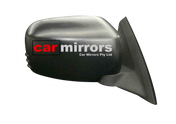
Heated Side Mirror Not Working? Switch, Fuse or Element
By Duber, The Car Mirror Man · Car Mirrors Australia · Updated August 2026 · 13 min read
Short answer: three things can stop a heated mirror working — the switch, the fuse, or the heating element behind the glass. The element is the one people assume and the one that fails least often. Check the switch and the fuse first, because those are cheap and quick, and only then look at glass. When the element genuinely has failed, replacement heated glass starts from $135 fitted.
In Sydney? We can sort out heated mirror glass at your home or work, anywhere across the metro — see our full Sydney mirror service.
Heated mirrors are one of those features nobody thinks about until the first cold, wet Sydney morning when the passenger mirror stays fogged and the rear window clears. This guide explains what is actually behind the glass, why the three failure points are not equally likely, and how to work out which one you have before anyone quotes you for a new mirror.
What is actually behind the glass
A heated mirror is not a special kind of mirror. It is ordinary mirror glass with a thin resistive heating film bonded to the back of it and a two-pin connector feeding that film [17].

Switch it on and the film draws a modest current, warms the glass by a few degrees, and the moisture on the front surface evaporates. That is the whole mechanism. It is the same principle as the element printed into a rear window, just smaller and hidden behind a reflective layer.
Three suspects, in order of likelihood
The order matters, because checking them in the wrong order is how people end up paying for glass they did not need.

Start with the rear window
The single most useful test takes five seconds and costs nothing. On the great majority of vehicles the mirror heaters are wired to the same switch as the rear-window demister.
With the engine running.
Give it a couple of minutes on a foggy morning. Is it clearing?
The switch and the circuit are alive. The fault is downstream, at the mirror.
The switch or the fuse is the problem, and the mirror glass is almost certainly fine.
How to tell whether a mirror heater is actually on
Heated mirrors are subtle by design. They do not get hot, they get slightly warm, and on a mild day you will feel nothing at all.
The reliable test is a cold, damp morning, or a light mist of water on the glass from a spray bottle. Turn the demister on and watch the pattern of the water. A working element clears the glass from the middle outward over two or three minutes. A dead one does nothing at all.
What you should not do is judge it by touch on a warm afternoon. A working mirror heater on a twenty-degree day feels exactly like a dead one.
When it is genuinely the element
Elements do fail, and there are two common ways.
The last of those is worth knowing about. If your heated mirror stopped working immediately after somebody replaced the glass, the odds are strongly on the connector rather than on a brand-new element having failed.
Why the correct glass matters
This is where fitting the lowest-priced available glass costs people the feature they were trying to keep.
Replacement glass for a heated mirror has to carry the element and the correct connector type for your vehicle. Plain glass will fit the backing plate perfectly well and look identical, and the heating will simply never work again. Two-pin, spade, and moulded plug connectors are all in use and they are not interchangeable.
It is the reason we work from a photograph before quoting rather than from a model year. The connector and the element are visible; the badge on the boot tells us very little.

Can you retrofit heating to a mirror that never had it?
Not reliably, and usually not economically. The wiring, the switch and the fuse all have to exist in the car already, and on a vehicle that was not built with heated mirrors they generally do not.
Stick-on aftermarket pads exist. We do not fit them, because they sit on the wrong side of the glass, they interfere with the adjuster travel, and they draw current through a circuit that was never designed for them.
What about blind-spot and auto-dim at the same time?
Plenty of Sydney cars have two or three of these features stacked into one mirror, and it changes the part rather than the diagnosis.
The important point is the same in every combination: a heating failure does not mean the blind-spot system has failed, and a blind-spot failure does not mean you need new glass.
What it costs
Heated glass costs more than plain glass because the part costs more, not because the labour changes.
| What is being replaced | What it covers | Price |
|---|---|---|
| Glass only | Correct ADR-compliant glass cut and fitted to your existing backing plate. | from $135 |
| Cover / housing | Outer cap swapped, glass and motor kept. | $150–$300 |
| Full mirror, plain | Whole assembly, manual or basic powered mirror. | $200–$350 |
| Full mirror, powered | Electric adjust, power fold or integrated indicator. | $350–$500 |
| Blind-spot, camera or auto-dim | Mirrors carrying driver-assist electronics. | Quoted per vehicle |
Every band above comes from our national price guide, which is the single source of truth for what we charge. If you want the full breakdown by part and by vehicle, read our side mirror replacement cost guide.
A switch or a fuse is a fraction of any of those, which is exactly why the diagnosis order matters.
Is a dead mirror heater a legal problem?
Not in itself. The design standard is about the mirror giving the driver a view of the road behind [1], and heating is not part of that requirement. A safety inspection checks that mirrors are present, intact, secure and adjustable [6] — not that the heating works.
Where it becomes a practical problem is on a fogged morning, because a mirror you cannot see out of is functionally the same as a mirror that is not there. The Australian Road Rules require a clear view [4], and on a wet winter morning in Sydney the heater is what delivers it.
What we check on site
Because if that circuit is dead, the mirror was never the problem.
Quick to pull and look at, and shared with other systems so we check what else is out.
Seated, clean and not corroded. A surprising number of faults end here.
Last, once the cheaper causes have been eliminated rather than assumed.
How long it takes
Heated glass takes no longer than plain glass to fit. The only extra step is reconnecting and testing the element before we leave.
Why Sydney drivers notice this in June, not January
Mirror heaters fail silently. Nothing warns you, and for most of the year there is no reason to use one.
What happens is that the element gives up somewhere in the warm half of the year, sits unnoticed for months, and then announces itself on the first genuinely cold, damp morning when the driver's mirror clears and the passenger one does not. By that point the actual failure is long past and there is nothing to connect it to.
It is worth testing them once at the start of winter for exactly that reason. A spray bottle and two minutes tells you where you stand before the mornings you actually need them.
Fog, frost and what the heater is really for
Heated mirrors clear three different things, and they work differently on each.
The rain case is the one people underrate. On a wet night, the difference between a heated mirror and a cold one is the difference between a usable image and a smear of headlights.

Two mirrors, one dead
A useful asymmetry, because it rules things out for free.
If one mirror heats and the other does not, the switch, the fuse and the main circuit are all provably working. Whatever is wrong is on the dead side, downstream of the split — which leaves the connector at that mirror, the wiring in that door, or that element.
If neither heats, the fault is almost certainly common to both, and that means upstream. Two independent elements failing on the same day is not impossible but it is not where anyone should start looking.
What we do not do
Two things worth stating plainly, because both get asked.
We do not fit stick-on heating pads to mirrors that were not built with heating. They sit in the wrong place, they foul the adjuster travel, and they draw current through a circuit never designed for them.
We also do not replace the interior mirror on the windscreen. That is auto glazier work, because re-attaching it means bonding to the windscreen itself. We work on the exterior side mirrors.
What a heated mirror actually draws
A common worry, and an unnecessary one. Mirror heating elements are among the smallest electrical loads on a car.
A pair of mirror elements together draws a fraction of what the rear-window demister draws, which is why the two share a switch and a circuit on most vehicles in the first place [17]. Leaving them on will not flatten a battery on a running engine, and on most cars the circuit is switched off with the ignition anyway.
Many vehicles also time the demister out automatically after ten or fifteen minutes, which is another reason people occasionally think the heater has failed when it has simply finished its cycle.
Before you ring anyone, check these three
On a damp morning with the demister on. If the rear window clears and the mirrors do not, the circuit is alive.
One dead and one working proves the switch, fuse and circuit are fine and narrows it to one side.
If somebody has had the mirror apart, an unseated two-pin connector is far more likely than a failed element.
Three checks, two minutes, and between them they eliminate most of the possibilities before a single dollar is spent.
What Sydney drivers tell us
Booking around a working week is most of what a mobile service is for.
Every review quoted on this site is a real, verified customer review. We do not write them and we do not edit them.
The short version
Check the rear window before you check the mirror. If the rear demister clears the glass and the mirrors stay fogged, the circuit is alive and the fault is at the mirror end. If neither clears, you are looking at a switch or a fuse and the mirror is innocent. The element is real, it does fail, and it is still the least likely of the three — which is why it should be the last one you pay for.
Frequently asked questions
Why has my heated side mirror stopped working?
Three things can cause it: the switch, the fuse, or the heating element behind the glass. The switch is the most common and the element the least, so check in that order rather than assuming you need new glass.
How do I test whether the mirror heater is working?
On a cold, damp morning turn on the rear demister and watch the mirror. A working element clears the glass from the middle outward over two or three minutes. On a warm day you will feel nothing either way, so touch is not a reliable test.
My rear window clears but the mirrors do not. What does that mean?
The switch, the fuse and the circuit are all alive, so the fault is at the mirror end. That points at the connector or the element itself.
Can I replace heated mirror glass with plain glass?
You can physically fit it, and the heating will never work again. Replacement glass for a heated mirror has to carry the element and the correct connector type for your vehicle.
How much does heated mirror glass cost?
Glass starts from $135 fitted. Heated glass sits above plain glass because the part costs more, and the exact figure depends on the vehicle and the connector. Send a photo for a fixed price.
Can you add heating to a mirror that never had it?
Not reliably. The wiring, the switch and the fuse have to be there already, and on a car that was not built with heated mirrors they generally are not.
Will replacing the glass affect my blind-spot warning?
No. The blind-spot radar sits in the rear bumper, not in the mirror. Fitting the correct glass keeps both the heating and the warning icon working normally.
Is a dead mirror heater illegal?
No. The standards require mirrors to be present, secure and to give a clear view. Heating is not part of that. It is a practical problem on a foggy morning rather than a legal one.
More on Sydney mirrors
Based in Sydney? These cover the rest of it.
Sources
- Australian Design Rule 14/02 — Rear Vision Mirrors, Federal Register of Legislation — www.legislation.gov.au/Details/F2006L02663
- ADR 14/02 Rear Vision Mirrors, full technical text (PDF), Department of Infrastructure — www.infrastructure.gov.au/sites/default/files/migrated/vehicles/design/f
- ADR 14/02 — current consolidated text, Federal Register of Legislation — www.legislation.gov.au/F2006L02663/latest/text
- Australian Road Rules, National Transport Commission — www.ntc.gov.au/laws-and-regulations/australian-road-rules
- Roadworthiness — vehicle safety and compliance, NSW Government — www.nsw.gov.au/driving-boating-and-transport/roads-safety-and-rules/vehi
- Get a safety inspection report (pink slip), Service NSW — www.service.nsw.gov.au/transaction/get-a-safety-inspection-report-pink-s
- Motor vehicle repairs — your rights, NSW Fair Trading — www.fairtrading.nsw.gov.au/buying-products-and-services/motor-vehicles/m
- Consumer guarantees on goods and services, ACCC — www.accc.gov.au/consumers/buying-products-and-services/consumer-guarante
- Wing mirror — history, design and regulation, Wikipedia — en.wikipedia.org/wiki/Wing_mirror
- Rear-view mirror — mount types and history, Wikipedia — en.wikipedia.org/wiki/Rear-view_mirror
- Car insurance — excess, cover types and claims, Moneysmart (ASIC) — moneysmart.gov.au/car-insurance
- Get help with a vehicle Defect Notice, Service NSW — www.service.nsw.gov.au/transaction/get-help-with-vehicle-defects
- Blind spot monitor — how the sensors and indicators work, Wikipedia — en.wikipedia.org/wiki/Blind_spot_monitor
- Motor Vehicle Census, Australia — latest release, Australian Bureau of Statistics — www.abs.gov.au/statistics/industry/tourism-and-transport/motor-vehicle-c
- eSafety checks (pink slips) and vehicle inspections, NSW Government — www.nsw.gov.au/driving-boating-and-transport/vehicle-registration/renewi
- Vehicle safety check and inspection fees, NSW Government — www.nsw.gov.au/driving-boating-and-transport/vehicle-registration/fees-c
- Defogger — heated mirror and rear-window elements, Wikipedia — en.wikipedia.org/wiki/Defogger
Prices and information in this article are indicative only and reflect real quoted jobs at the time of publication. Costs vary with vehicle, part availability and features. Send a photo for an exact fixed price.